 WeCult App

9 Books Where Nature Gets Queer and Queer Lives Find Nature
Explore how literature is redefining our understanding of queerness not as an anomaly, but as an intrinsic, vibrant part of the natural world.
Biological Exuberance: Animal Homosexuality and Natural Diversity
Bruce Bagemihl’s foundational 1999 work provides extensive scientific evidence of same-sex behaviors across the animal kingdom. It’s essential for understanding the natural, biological basis of queerness, moving it from the fringes to the core of life itself.
Mad Eden (Forthcoming Novel)
While not yet released, this novel, as described by its author, features a genderqueer protagonist finding solace and communication cues in the natural world, specifically through observing an alligator. It exemplifies how queer characters can find belonging and understanding in wild spaces, blurring the lines between human and natural ecologies.
Orlando by Virginia Woolf
Published in 1928, Woolf’s masterpiece transcends time and gender, following its titular character over centuries. Orlando’s fluid identity and experiences, often set against vast natural landscapes, challenge rigid notions of self and belonging, making it a proto-queer ecological text.
Under the Greenwood Tree by Thomas Hardy
This 1872 novel, while not explicitly queer, centers on the lives and relationships of rural villagers and their deep connection to the English countryside. Its focus on community and the rhythms of nature offers a backdrop against which non-normative lives could theoretically exist, highlighting the potential for queer lives within pastoral settings.
The Color Purple by Alice Walker
Alice Walker’s 1982 novel, set in the rural American South, explores the profound love and resilience between Black women, including the central lesbian relationship between Celie and Shug Avery. It powerfully depicts queer intimacy flourishing amidst hardship and the natural world.
Giovanni's Room by James Baldwin
Published in 1956, Baldwin’s novel starkly contrasts the vibrant, often desperate, queer lives in Paris with the protagonist’s internal conflict and his lover’s connection to a more traditional, almost elemental, existence. The city itself becomes a complex ecosystem of desire and societal pressure.
Stone Butch Blues by Leslie Feinberg
This seminal 1993 novel tells the life story of Jess Goldberg, a butch lesbian navigating identity, class, and gender in mid-20th century America. While urban settings are prominent, the narrative’s raw honesty about survival and self-definition resonates with a primal, ecological struggle for existence.
Tipping the Velvet by Sarah Waters
Set in Victorian England, Waters’ 1998 debut novel follows Nan King’s journey through the London theatre scene and her passionate relationship with another woman. It vividly portrays queer desire and community blossoming within the confines of a specific time and place, hinting at the naturalness of these connections.
The Well of Loneliness by Radclyffe Hall
Published in 1928, this novel was groundbreaking for its sympathetic portrayal of a lesbian protagonist, Stephen Gordon. Though controversial, it explored themes of identity and love in a way that, for its time, sought to normalize queer existence within the broader human experience, touching on nature’s acceptance. Bottom Line: These books reveal that queerness isn't separate from nature, but an inherent, diverse expression of life itself.
This list dives into how queer ecology in literature challenges traditional boundaries, mirroring nature's own fluid complexities.




WeCult App
Track your books — all in one place
Follow releases, track progress, discover what matches your taste. Rate "9 Books Where Nature Gets Queer and Quee…" on the app.
More Like This
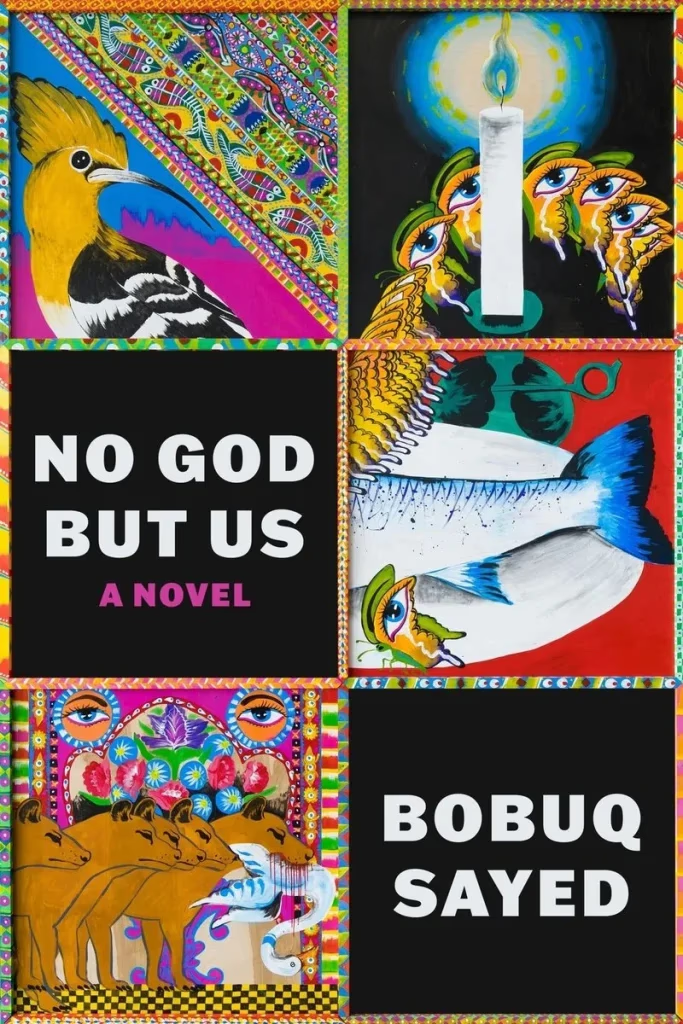
Bobuq Sayed's Debut Novel Reimagines the American Abroad Story
Bobuq Sayed's novel, No God but Us, challenges the century-old American Abroad narrative by centering queer, racialized protagonists. It explores themes of empire, desire, and contested belonging through the intertwined stories of two Afghan men in Istanbul.
Ann Patchett's 'Whistler' Promises Luminous Reunion and Lingering Questions
Ann Patchett's highly anticipated new novel, 'Whistler,' is set to explore the intricate tapestry of memory and the enduring power of human connection. Fans can anticipate a deeply resonant story of rediscovery arriving in summer 2026.

Rebellious Literature: How Fictional Women Offer Hope in Dark Times
From the oppressive regime of Gilead to imagined matriarchal societies, literature's rebellious women are providing a vital source of hope and inspiration for readers navigating challenging realities. An exploration of these powerful narratives reveals a recurring theme of resilience and the enduring strength of the female spirit.