 WeCult App
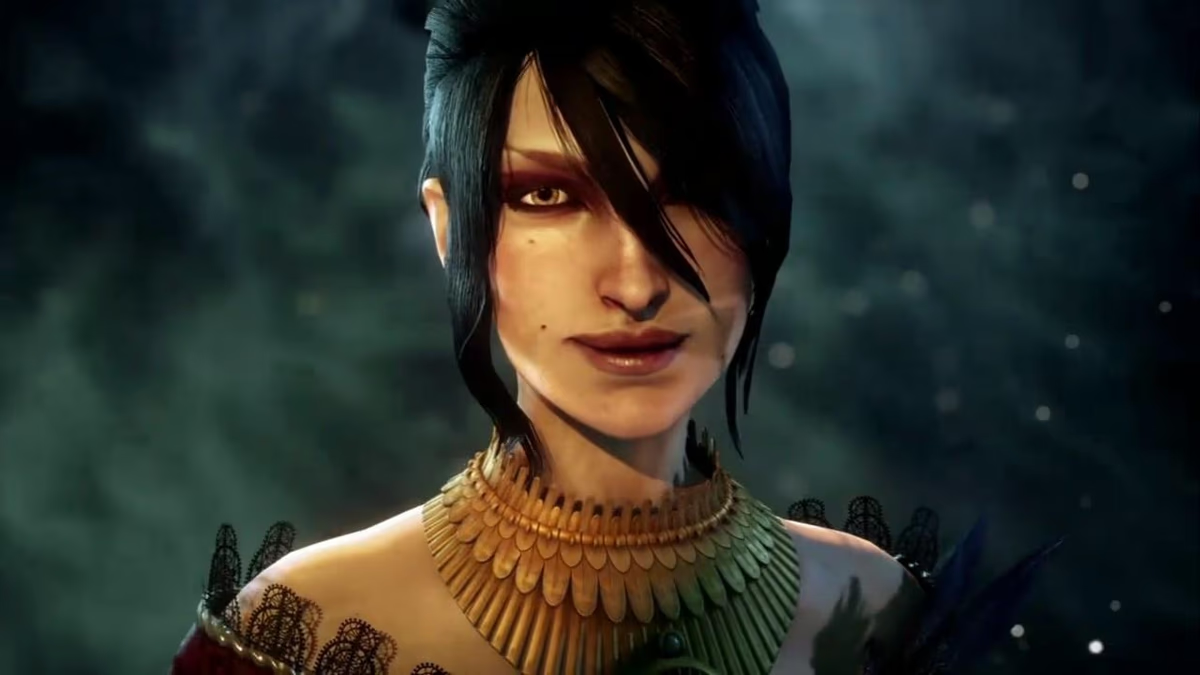
Ex-Dragon Age Boss Suggests Movie-Style Product Placement for Games
With game development costs soaring, a former BioWare lead proposes integrating movie-style product placement to offset expenses. This could reshape how games are funded and monetize their experiences.
The escalating costs of developing AAA video games are forcing industry veterans to consider unconventional monetization strategies. Mark Darrah, the former producer on the Dragon Age series, has suggested that incorporating movie-style product placement could be a viable solution to bridge the financial gaps.
Darrah highlighted in a recent video discussing game monetization that while live-service elements have become a staple for recouping massive development budgets, not all games can succeed with this model. He pointed to the live-action Smurfs movie, which he claims was entirely financed by product placement, effectively making the film free to produce. This contrasts sharply with the current gaming landscape, where games often rely on post-launch content or extensive live-service components to earn back hundreds of millions of dollars.
"My understanding is the live-action Smurfs movie paid for itself entirely through product placement," Darrah said. "So the movie was effectively made for zero dollars simply through the sale of product placement. Contrast that with the way that games make money."
Furthermore, Darrah expressed concerns that subscription services like Xbox Game Pass and PlayStation Plus, while popular, do not always yield substantial revenue for developers. He warned that these platforms could inadvertently encourage "degenerative design" as developers might be pressured to "juice the numbers" to appear more successful. The over-reliance on microtransactions, he argued, also skews development towards certain genres, potentially stifling others and leading to a future where only live-service AAA games can thrive. This is a scenario Darrah hopes the industry can avoid, especially after recent years have shown that not every game is suited for a live-service model.
A New Era of In-Game Advertising?
For players, this proposed shift could mean seeing familiar brands integrated more prominently within their favorite virtual worlds. Unlike the often intrusive pop-ups or mandatory ads seen in some mobile titles, movie-style placement suggests more organic integration, perhaps seeing characters use branded items or visit real-world inspired locations. The success of this model hinges on execution; done poorly, it risks alienating players and breaking immersion. However, if implemented thoughtfully, it could allow developers to focus more on core gameplay and narrative, freeing them from the constant pressure to design around live-service mechanics. This could lead to a richer variety of single-player experiences and innovative game designs that might otherwise be deemed too risky in the current market.
What's Next
While Mark Darrah's proposal is speculative, it opens a crucial conversation about the future of game development funding. As production costs continue their upward trajectory, players may indeed see more overt commercial partnerships become a standard feature in future AAA releases. The exact implementation and player reception will be key indicators of its long-term viability.
This analysis explores a potential shift in game monetization, moving beyond live services and microtransactions towards a more traditional advertising model, which could significantly impact game design and player experience.
WeCult App
Track your games — all in one place
Follow releases, track progress, discover what matches your taste. Rate "Ex-Dragon Age Boss Suggests Movie-Style …" on the app.
More Like This
GTA 6's Shadow Forces 5 Major Games Into September Battle Royale
The colossal anticipation for Grand Theft Auto VI's 2026 release has created a seismic shift in the gaming industry's release calendar. Rockstar's behemoth is forcing a wave of highly anticipated titles into an unprecedented September showdown.
PlayStation's Next State of Play: 5 Major Reveals We're Hoping For
Sony's State of Play is set to dazzle fans with potential reveals from major studios. With a history of surprising announcements, this upcoming showcase could redefine our most anticipated game lists.
Fortnite's The Foundation Frozen as The Rock's Character Suffers Shock Defeat
Fortnite's latest live event, 'Shattered,' delivered a dramatic conclusion to its season, seeing Dwayne 'The Rock' Johnson's character, The Foundation, defeated and frozen. The event also unmasked a key ally, revealing a surprising twist for players.