 WeCult App
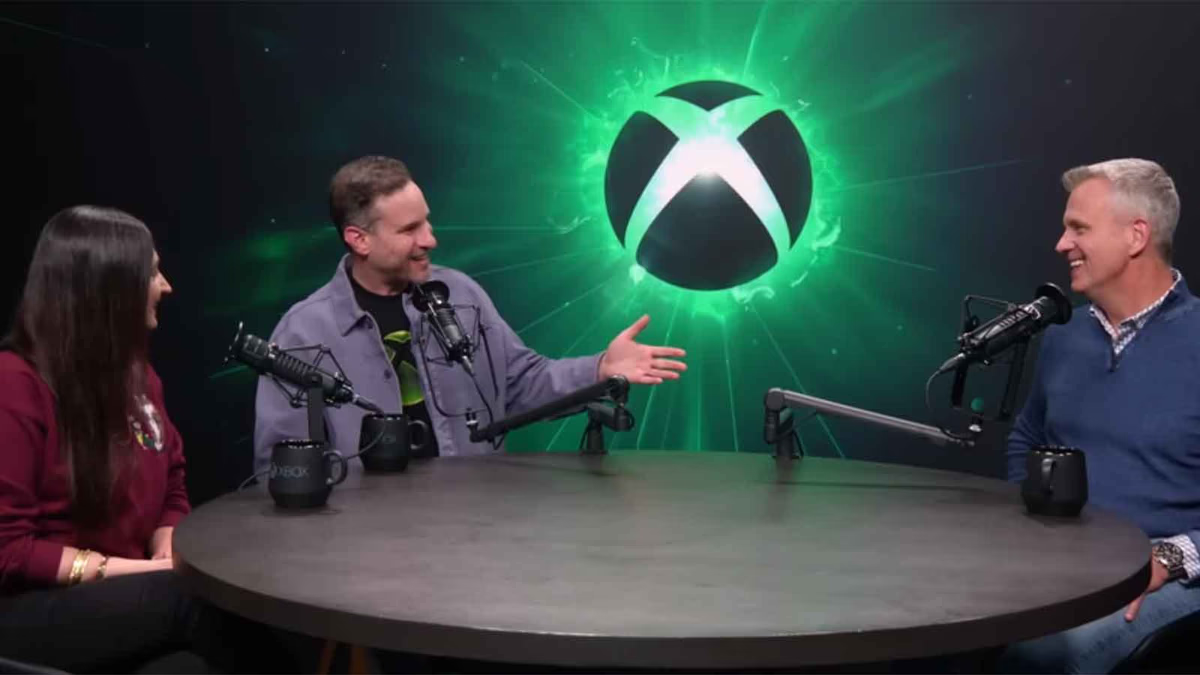
5 Key Decisions That Led to Xbox Losing the Console War
The era of fierce console competition has seemingly drawn to a close, with Xbox conceding ground to PlayStation. We explore the pivotal moments and strategic shifts that defined this outcome.
The roar of the console wars, a defining characteristic of the gaming landscape for decades, has finally quieted. While Sony's PlayStation consistently captured the market's imagination and sales, Microsoft's Xbox found itself perpetually in a challenging position. The narrative of Xbox's struggle is not one of sudden collapse, but a series of strategic choices and market shifts that gradually reshaped the competitive arena. By 2026, the traditional metrics of hardware sales and platform exclusivity, once the bedrock of this conflict, have become increasingly secondary to new models of content delivery.
The Xbox One Reveal Disaster
The seeds of Xbox's eventual decline in the traditional console war were arguably sown during the Xbox One reveal event in 2013. Early messaging was heavily skewed towards television integration and restrictive policies regarding used games and online connectivity. This approach alienated a significant portion of the core gaming audience, who were already anticipating Sony's counter-pitch. PlayStation's response was remarkably effective, focusing on the gamer and the games themselves, a stark contrast to Xbox's perceived overemphasis on multimedia features. This initial misstep created a perception gap that Xbox struggled to close throughout that generation, setting a tone of consumer skepticism.
The Exclusive Game Drought and Studio Closures
A consistent pillar of console dominance has always been the strength of exclusive titles. Throughout the PlayStation 4 and Xbox One era, Sony consistently delivered critically acclaimed, system-selling exclusives like God of War, Marvel's Spider-Man, and The Last of Us Part II. These games not only defined the PlayStation experience but also became cultural touchstones. In contrast, Xbox faced significant challenges in matching this output. Furthermore, the closure of promising studios that had developed beloved franchises fueled concerns about Microsoft's long-term commitment to nurturing unique game development for its platform. This perceived lack of a robust exclusive pipeline created a significant disadvantage when competing for player mindshare and hardware purchases. The decline of Halo, once Xbox's flagship franchise, further compounded these issues, leaving a void in the brand's identity.
Shifting Focus: Game Pass and Multi-Platform Future
In recent years, Xbox has pivoted its strategy, heavily investing in its Game Pass subscription service and embracing multi-platform releases, including bringing flagship titles like Halo: Combat Evolved to PlayStation 5 in 2026. While this approach has found success in expanding Xbox's reach and offering value to players, it fundamentally alters the nature of the console war. The traditional battle for hardware supremacy, driven by exclusive software, has given way to a focus on service-based ecosystems. This shift, while potentially sustainable for Microsoft's broader business, signals the end of the console war as it was once understood. The core expectation for many fans was for Xbox to focus on its own platform, but the new CEO's strategy appears to be redefining what it means to win in the current gaming landscape.
What's Next
With Halo: Combat Evolved remake heading to PlayStation 5 in 2026, the traditional console war framework is officially obsolete. Xbox's future success will likely be measured not by console sales figures but by the adoption and engagement with its subscription services and multi-platform strategy.
This analysis delves into the strategic missteps and evolving market dynamics that saw Xbox falter in the traditional console war, offering a compelling narrative for dedicated series fans.
WeCult App
Track your series — all in one place
Follow releases, track progress, discover what matches your taste. Rate "5 Key Decisions That Led to Xbox Losing …" on the app.
More Like This

Gothic 1 Remake and Star Fox Lead June 2026 Game Releases
The year is halfway through, and the gaming world is gearing up for a massive second half. June 2026 alone promises a slate of highly anticipated titles across all major platforms.

Jennifer Lopez's 'Office Romance' Soundtrack Drops a Surprise Brett Goldstein Cover
The latest Jennifer Lopez rom-com on Netflix is packed with nostalgic 80s pop and a few unexpected modern twists. Dive into every track that makes 'Office Romance' sing, including a unique Public Enemy rendition.
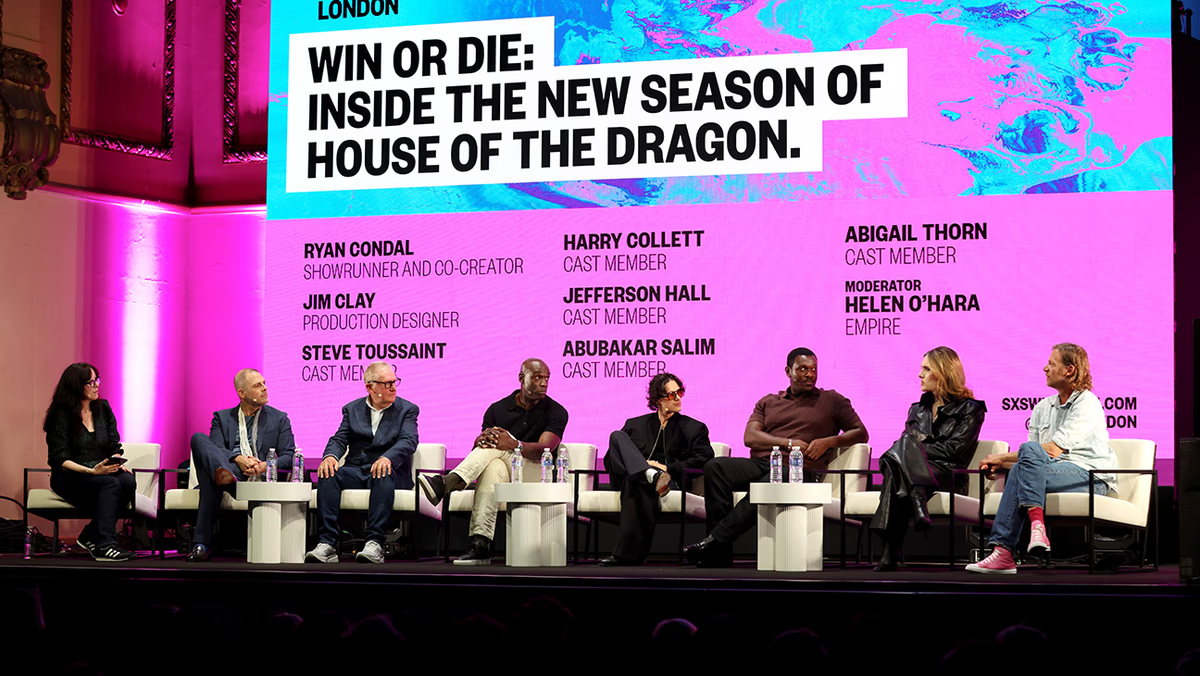
House of the Dragon: Gullet Battle Secrets Revealed at SXSW London
The most expensive and dangerous sequence in the show's history is teased ahead of Season 3. Learn how the team behind House of the Dragon brought the brutal Battle of the Gullet to life.