 WeCult App
Remembering Marcia Lucas: The Unsung Editor Who Shaped "Star Wars"
The film world mourns the loss of Marcia Lucas, the brilliant editor whose work was instrumental in crafting the original "Star Wars" trilogy. Her passing at 80 marks the end of an era for a true cinematic artisan.
The film community is reflecting on the legacy of Marcia Lucas, an Oscar-winning editor whose crucial contributions to cinema, particularly the original "Star Wars" trilogy, are now being celebrated. Lucas passed away last week at the age of 80, leaving behind a body of work that significantly shaped some of the most beloved films in history.
Born in 1945, Lucas carved out a remarkable career in an era when the film industry was still largely dominated by men. Her early work included editing George Lucas's debut feature, "THX-1138", and the groundbreaking coming-of-age story "American Graffiti" in 1973, which earned her first Oscar nomination alongside her mentor, Verna Fields. This collaboration with George Lucas was just the beginning of a partnership that would redefine blockbuster filmmaking.
A Master of the Cut
While her marriage to George Lucas brought her public attention, it was her unparalleled skill in the editing suite that truly set her apart. Her Academy Award for Best Film Editing, shared with Richard Chew and Paul Hirsch, for "Star Wars: Episode IV – A New Hope" in 1977, is a testament to her talent. She was instrumental in shaping the pacing, emotional beats, and sheer kinetic energy that made the film a global phenomenon. Beyond "Star Wars", Lucas also lent her talents to cinematic giants like Martin Scorsese, serving as editor on "Alice Doesn't Live Here Anymore" and supervising editing teams for his masterpieces "Taxi Driver" and "New York, New York". Her work on "Taxi Driver", in particular, is often highlighted for its masterful blend of genres and its contribution to the film's unforgettable character study and gritty atmosphere.
A Legacy Beyond the Saga
Fans and critics alike are acknowledging the immense, often understated, role Lucas played in cinematic history. Her ability to imbue films with rhythm and emotional depth was not limited to the sci-fi genre. Her early work with Francis Ford Coppola as an assistant editor and location scout on "The Rain People" and her role as assistant editor on "Medium Cool" further showcase her versatility and early immersion in the vibrant filmmaking scene of the late 1960s and 70s. The narrative surrounding her passing often centers on her connection to George Lucas, but it's vital to recognize her independent achievements and the sheer artistry she brought to every project. She wasn't just an editor; she was a crucial architect of cinematic storytelling, shaping narratives that continue to resonate decades later.
What's Next
As tributes continue to pour in, the film community is encouraged to revisit Lucas's filmography, appreciating the meticulous craft that lies beneath the surface of these beloved movies. Her work on "Star Wars", "Taxi Driver", and "American Graffiti" remains essential viewing for anyone interested in the art of filmmaking.
Marcia Lucas's career exemplifies the profound impact of editing, demonstrating how a keen eye for rhythm and pacing can transform raw footage into iconic cinematic experiences.



WeCult App
Track your films — all in one place
Follow releases, track progress, discover what matches your taste. Rate "Remembering Marcia Lucas: The Unsung Edi…" on the app.
More Like This
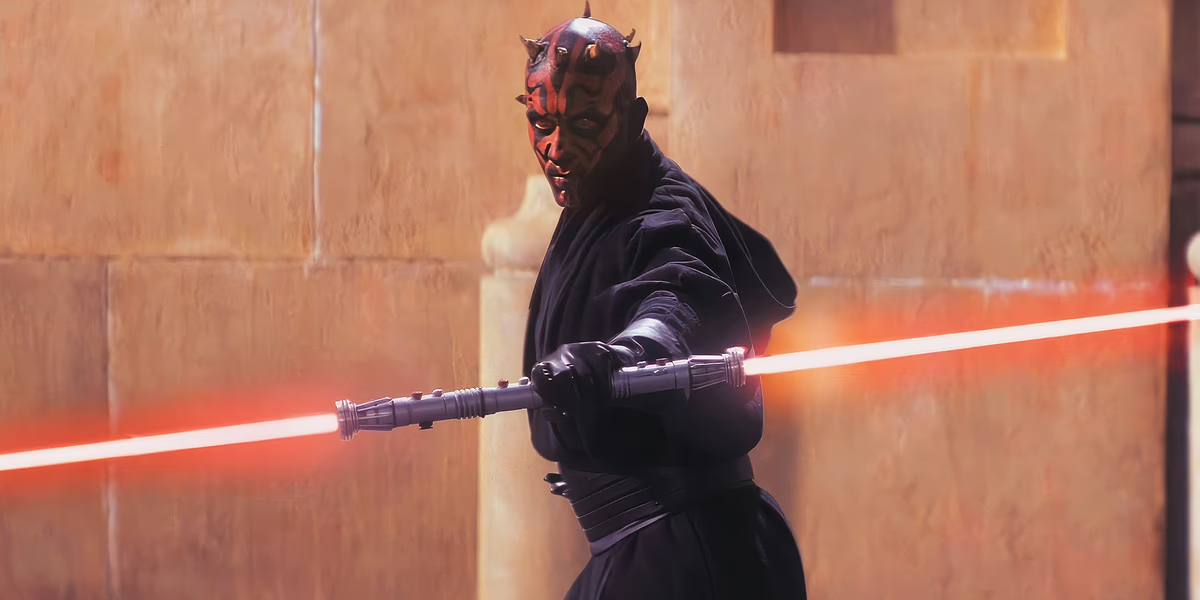
10 Iconic Lightsaber Designs That Electrified Star Wars History
From classic cinematic weapons to modern marvels, this list dives into the most unforgettable lightsaber designs that have defined the galaxy far, far away.
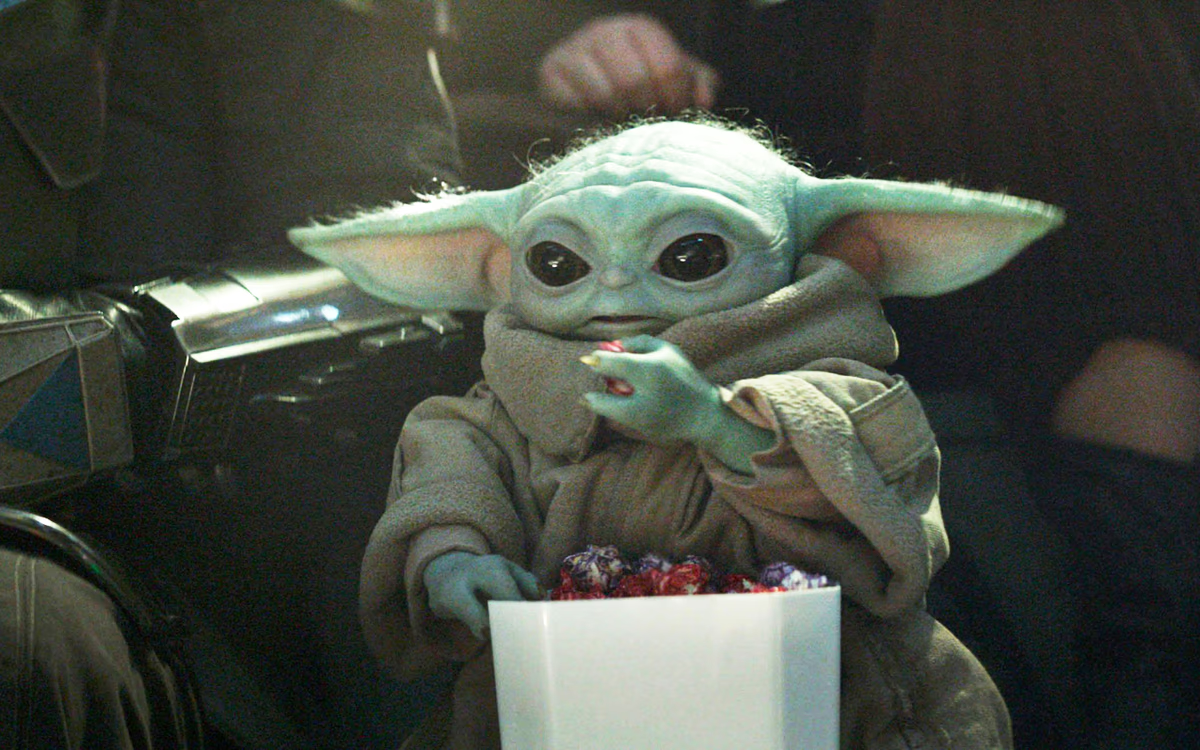
Grogu's Global Takeover: 100+ Artists Forged the Star Wars Icon
Forget the Mandalorian, the galaxy's newest darling has arrived. Over 100 artists and technicians poured their talent into crafting Grogu, the breakout star of 'Star Wars: The Mandalorian and Grogu'.
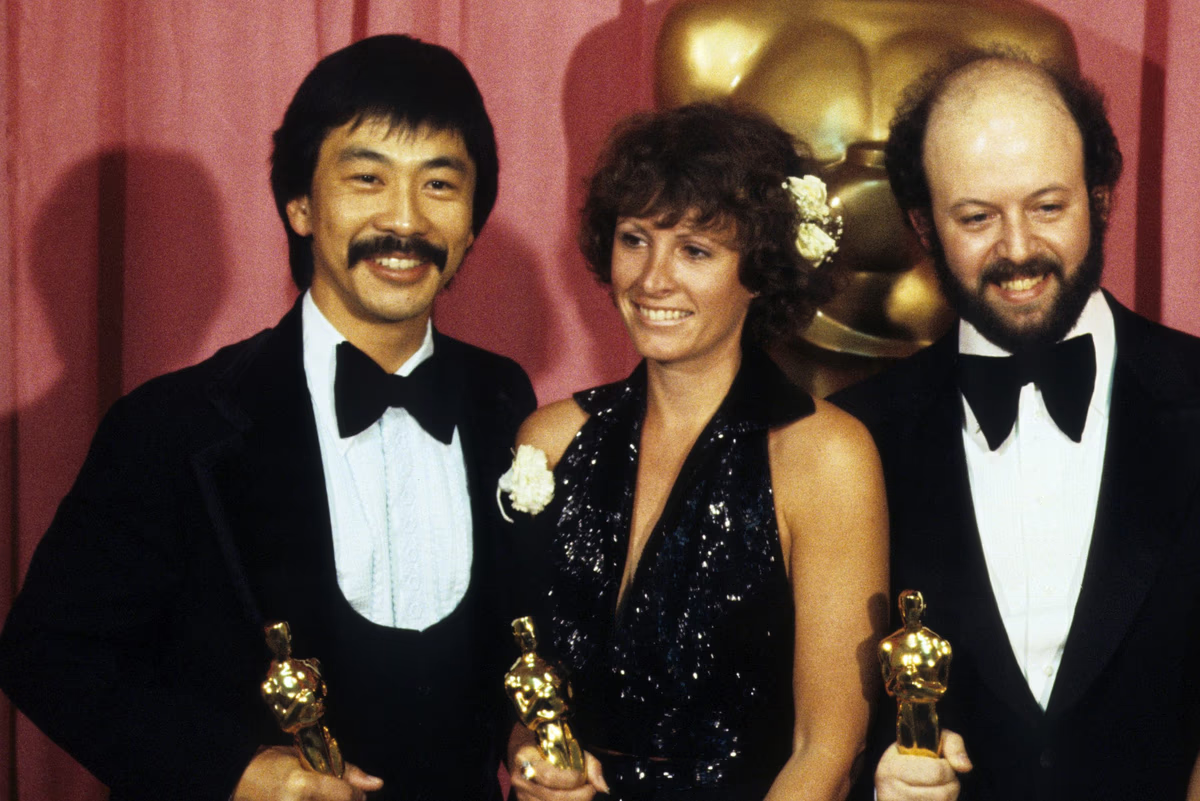
Lucasfilm Mourns Marcia Lucas, Oscar-Winning 'Star Wars' Editor
The film editing legend, known for her foundational work on the original 'Star Wars' trilogy, has passed away at 80. Lucasfilm and fans alike are remembering her profound impact on cinematic history.