 WeCult App
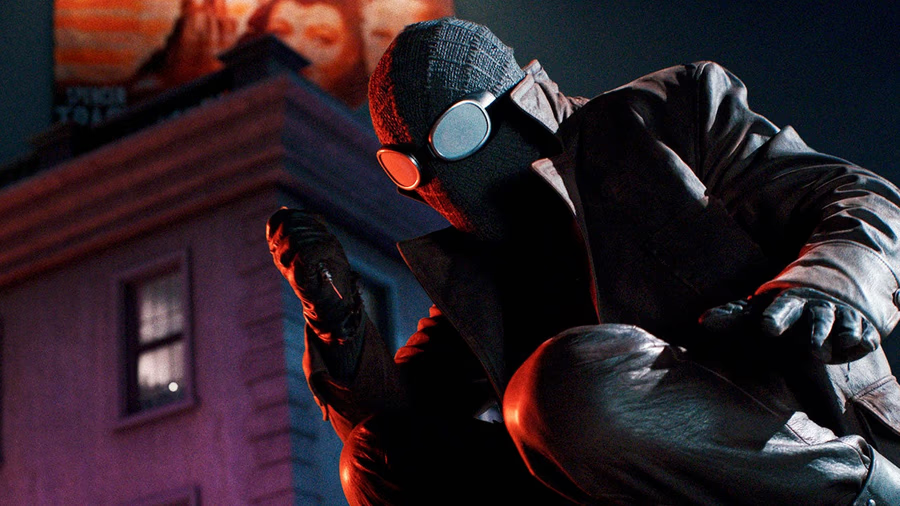
Spider-Noir: Unpacking Every Comic Nod in the New Series
The gritty, black-and-white world of **Spider-Noir** is finally here, weaving a fresh tapestry of Marvel lore into its Prohibition-era setting. Dive deep into the hidden references and comic book callbacks that enrich this unique take on the web-slinger's universe.
The long-awaited live-action series Spider-Noir has officially swung onto our screens, bringing a fresh, atmospheric take on the Marvel universe to Prime Video and MGM+. This isn't just another Spider-Man story; it's a reimagining set in a rain-slicked, Prohibition-era New York, where the titular hero, known here as 'The Spider,' navigates a world of shadows, secrets, and classic comic book callbacks. For fans who've followed Peter Parker's journey through decades of comics, movies, and games, Spider-Noir offers a familiar yet distinct landscape, packed with nods to its rich source material that reward dedicated observation.
The series explicitly establishes itself as a standalone entity, separate from the established cinematic universes of Tobey Maguire, Andrew Garfield, and Tom Holland, and equally disconnected from the animated Spider-Verse films. This creative decision allows Spider-Noir to forge its own identity, exploring familiar themes through a new lens. The production team has clearly put immense effort into populating this world with details that resonate with the deep history of Spider-Man comics. From subtle visual cues to thematic echoes, the series invites viewers to uncover its secrets, much like a seasoned detective piecing together a case.
Echoes of the Past: Familiar Faces and Places
One of the most immediate and recognizable references is the appearance of The Daily Bugle. While Peter Parker himself and the bombastic J. Jonah Jameson are absent, the newspaper stands that The Spider passes are stocked with the iconic publication. This serves as a potent reminder of the original Spider-Man's world, even in this alternate reality. The Bugle is not merely a backdrop; it's revealed to be the former employer of Robbie Robertson (played by Lamorne Morris), a character often depicted as a loyal ally and editor at the paper. His desire to reclaim his position adds a layer of narrative depth, tying a familiar name to the new world's unfolding drama.
Furthermore, the series doesn't shy away from the core tenets of the Spider-Man mythos. In an early montage, as The Spider contemplates the grave of Ruby L. Williams – a character not drawn from the comics, emphasizing the series' original narrative – he utters a phrase that is the very heart of the Spider-Man legend: "With great power comes great responsibility." This iconic line, first penned by Stan Lee in Amazing Fantasy #15, is presented here as a poignant, personal revelation rather than a simple catchphrase. The subtle alteration from Lee's original "With great power there must also come – great responsibility" is a small but significant detail, showing an awareness of the character's foundational text while adapting it for this specific iteration.
Villains of the Era and Beyond
Beyond the direct references, Spider-Noir brings to life some of Marvel's most formidable adversaries, reimagined for its unique setting. Villains like Tombstone and Sandman are central figures in this dark rendition, their powers and origins fitting seamlessly into the grimy, supernatural underbelly of Prohibition-era New York. The inclusion of these classic antagonists, alongside hints of others such as Electro and Molten Man, demonstrates a commitment to exploring the broader Spider-Man rogues' gallery through a noir filter. The visual design and narrative integration of these characters are crucial to the series' success, transforming them from comic book archetypes into tangible threats within this distinct universe.
The series' commitment to detail extends to its visual storytelling, with the black-and-white cinematography itself being a deliberate choice to evoke classic film noir and early comic book aesthetics. This stylistic decision enhances the mood and atmosphere, making the Easter eggs feel less like forced inclusions and more like organic elements of a world steeped in history and consequence. The careful crafting of this universe ensures that each reference, no matter how small, contributes to the overall immersion and thematic resonance.
A World of Its Own, Yet Universally Connected
What makes Spider-Noir particularly exciting for fans is its ability to create an entirely new corner of the Marvel multiverse that still feels connected to the core of what makes Spider-Man stories compelling. The emotional weight of loss, the burden of power, and the struggle for justice are all present, filtered through the lens of noir. This approach allows for a fresh perspective on familiar themes, appealing to both hardcore fans who appreciate the deep cuts and casual viewers who are drawn in by the compelling atmosphere and character-driven narrative.
The series premiere, which arrived on May 27, 2026, has already sparked considerable discussion among fans dissecting every frame for hidden meanings and connections. The deliberate choice to create a separate continuity, free from the constraints of existing film sagas, has opened up exciting possibilities for future storytelling. It allows the creators to experiment boldly with characters and plotlines, ensuring that Spider-Noir can stand on its own while still honoring its comic book heritage.
What's Next for The Spider
With the first season now fully available to stream, the future of Spider-Noir appears bright, promising further exploration of its unique universe and its inhabitants. The successful integration of classic comic elements with a fresh narrative has laid a strong foundation for subsequent seasons. Fans will undoubtedly be eager to see which other Marvel characters might be reimagined in this compelling noir setting and how The Spider's journey will continue to unfold. The potential for new villains, deeper dives into established characters, and further narrative expansions within this distinct continuity is immense.
This series masterfully blends classic Spider-Man mythos with a distinct noir aesthetic, offering a compelling narrative that appeals to long-time comic fans and newcomers alike through its clever integration of familiar elements.




WeCult App
Track your games — all in one place
Follow releases, track progress, discover what matches your taste. Rate "Spider-Noir: Unpacking Every Comic Nod i…" on the app.
More Like This
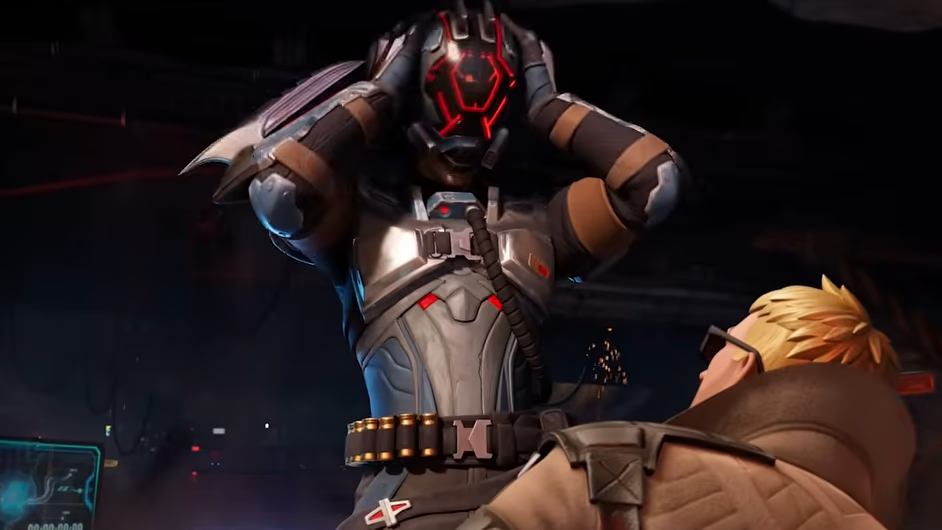
Fortnite's The Foundation Frozen as The Rock's Character Suffers Shock Defeat
Fortnite's latest live event, 'Shattered,' delivered a dramatic conclusion to its season, seeing Dwayne 'The Rock' Johnson's character, The Foundation, defeated and frozen. The event also unmasked a key ally, revealing a surprising twist for players.
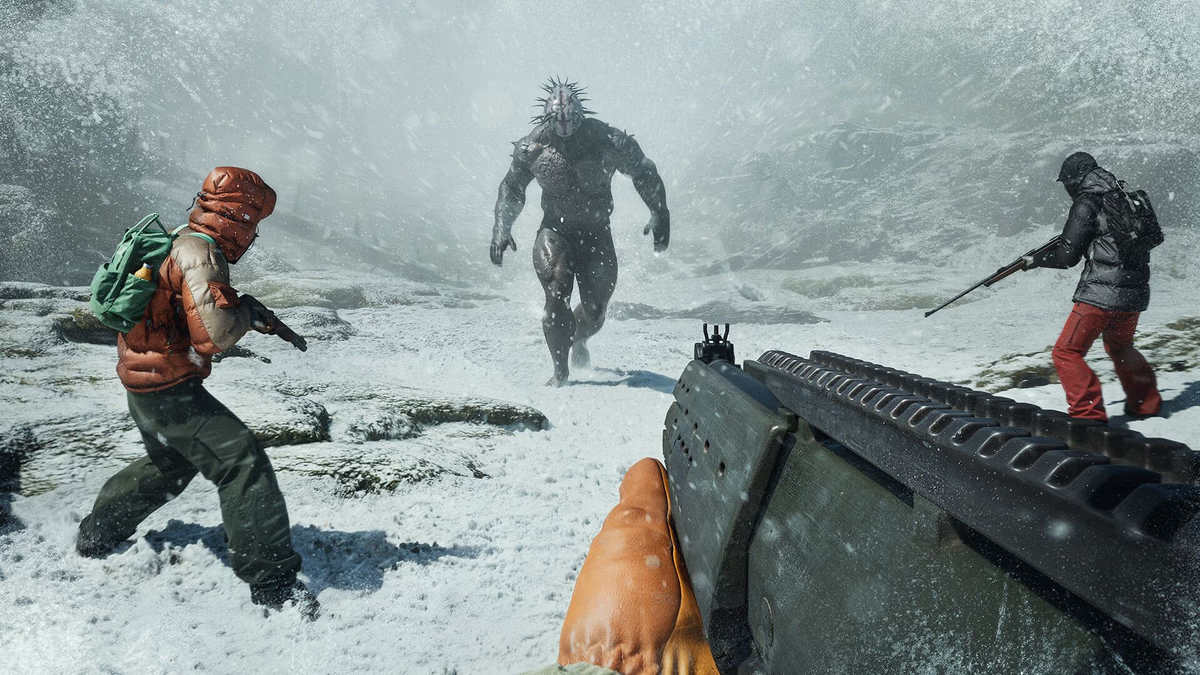
Veterans From Massive, Epic Games Unveil New Survival Shooter HAEX
A new first-person survival shooter called HAEX has been revealed by industry veterans. The game promises a challenging experience set on an alien-scarred world.
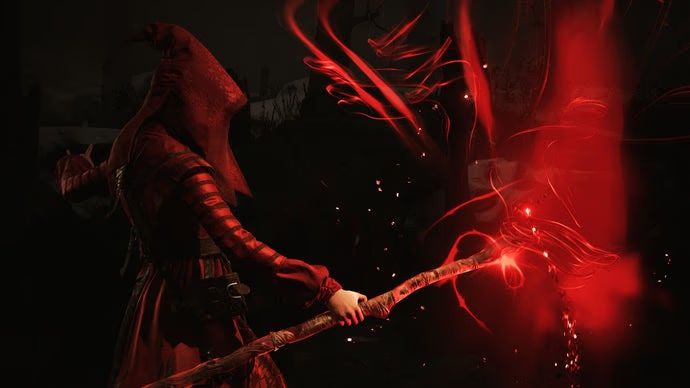
Assassin's Creed Creator's Forgotten Fantasy Game, 1666: Amsterdam, Finally Re-Emerges
Patrice Désilets, the visionary behind the original Assassin's Creed, is bringing his long-lost supernatural fantasy game, 1666: Amsterdam, back from the brink. After a decade in development limbo, a playable prologue is now available, signaling a potential release later this year.