 WeCult App
Acer Predator Atlas 8: Intel's New Arc G3 Chips Power a Legion Go Competitor
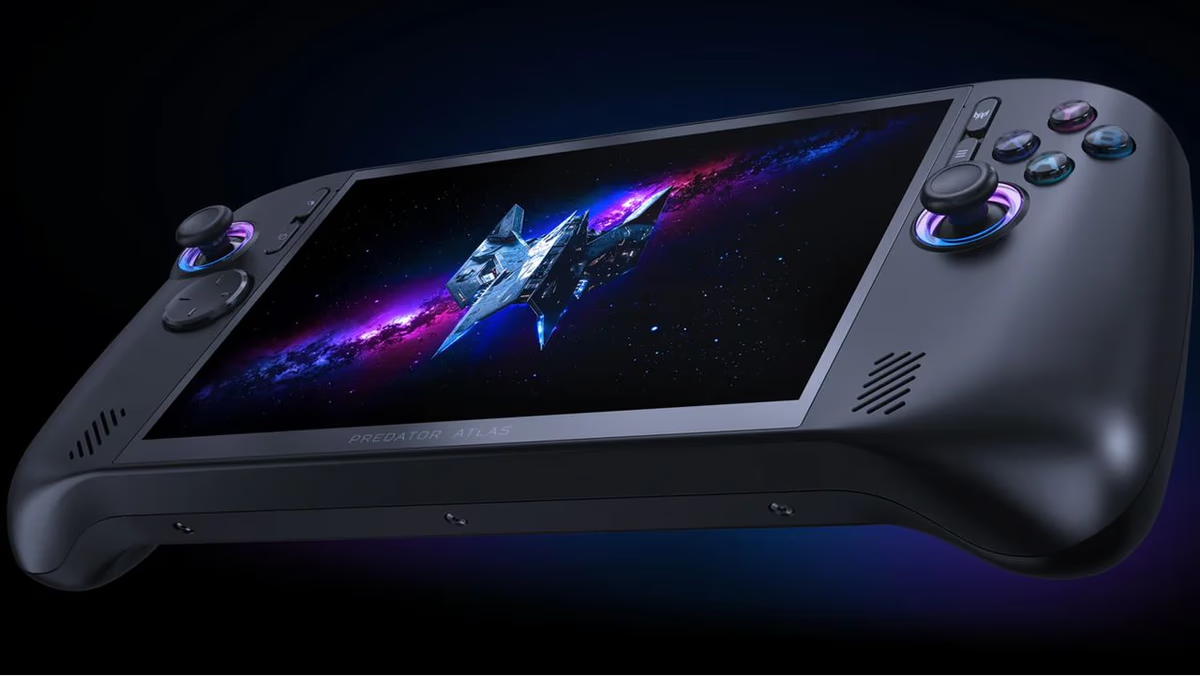
Acer has unveiled the Predator Atlas 8, a new handheld gaming PC featuring Intel's upcoming Arc G-Series processors. This device shares striking design and screen similarities with the Lenovo Legion Go S, aiming to capture the premium handheld market.
The handheld gaming PC market continues to heat up, and Acer is making a bold entrance with its Predator Atlas 8. This new device is set to leverage Intel's brand-new Arc G-Series processors, specifically the "Panther Lake" architecture, aiming to offer a potent alternative to the AMD silicon that currently powers many popular handhelds like the Steam Deck and Asus ROG Ally.
Early impressions suggest the Predator Atlas 8 bears a strong resemblance to the Lenovo Legion Go S, a design choice that isn't necessarily a bad thing. The Legion Go S is well-regarded for its comfortable ergonomics, and the Atlas 8 appears to adopt this successful formula. Crucially, both devices share identical screen specifications: an 8-inch display with a 1900 x 1200 resolution, VRR support, a 120 Hz maximum refresh rate, and 500 nits of peak brightness. This screen quality is a significant factor for portable gaming, providing sharp visuals and smooth motion, though it notably lacks an OLED panel.
Powering the Portable Revolution
The primary differentiator for the Predator Atlas 8 will undoubtedly be its Intel Arc G3 silicon. These chips are designed to bring Intel's integrated graphics capabilities to the forefront of handheld gaming, supporting up to Arc B390 graphics and Intel's XESS 3 upscaling technology. XESS 3 is Intel's AI-powered solution aimed at reducing stutter and input lag while boosting frame rates, a critical feature for competitive and demanding PC games on the go. The performance of these new chips against established competitors will be a key point of interest for enthusiasts.
Beyond the processor, Acer is emphasizing battery life. The Predator Atlas 8 boasts a substantial 80 Wh battery, matching the impressive capacity of the Asus ROG Xbox Ally X. This is a critical metric for handhelds, and combined with the efficiency of the new Panther Lake architecture, Acer is promising "exceptional battery life." While previous tests of Panther Lake showed it performing neck-and-neck with previous-generation Lunar Lake in efficiency, the larger battery capacity offers significant potential for extended gaming sessions. However, reports suggest the device might be quite heavy, especially if equipped with a smaller, though still substantial, 60 Wh battery option.
Fan Anticipation and Design Parallels
For fans of portable PC gaming, the Predator Atlas 8 represents another exciting option entering a market that has rapidly expanded in recent years. The shared design language with the Lenovo Legion Go S suggests Acer has prioritized a comfortable and functional user experience, which is paramount for devices intended for long play sessions. The inclusion of Intel's latest graphics technology, coupled with a high-refresh-rate, high-resolution display, positions the Atlas 8 as a serious contender for those seeking a premium handheld experience that can handle a wide range of Windows 11 titles.
What's Next
The Acer Predator Atlas 8 is slated for release in October 2026. Gamers will be eager to see benchmarks and real-world performance reviews once the device becomes available, particularly how the Intel Arc G3 chips perform in demanding titles and how the 80 Wh battery holds up under sustained use.
The Acer Predator Atlas 8's integration of Intel's Arc G3 chips and its competitive hardware specifications signal a maturing handheld PC market, offering gamers more powerful and potentially longer-lasting portable options.

WeCult App
Track your games — all in one place
Follow releases, track progress, discover what matches your taste. Rate "Acer Predator Atlas 8: Intel's New Arc G…" on the app.
More Like This
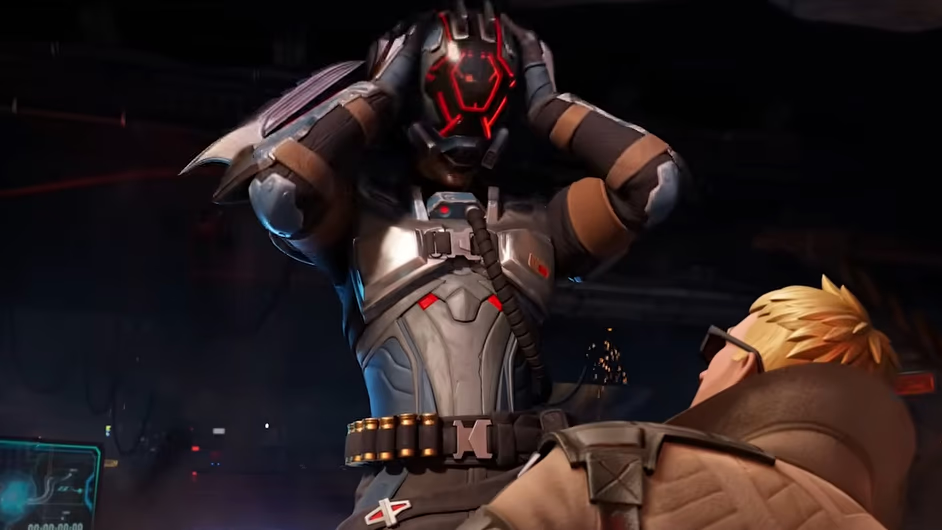
Fortnite's The Foundation Frozen as The Rock's Character Suffers Shock Defeat
Fortnite's latest live event, 'Shattered,' delivered a dramatic conclusion to its season, seeing Dwayne 'The Rock' Johnson's character, The Foundation, defeated and frozen. The event also unmasked a key ally, revealing a surprising twist for players.
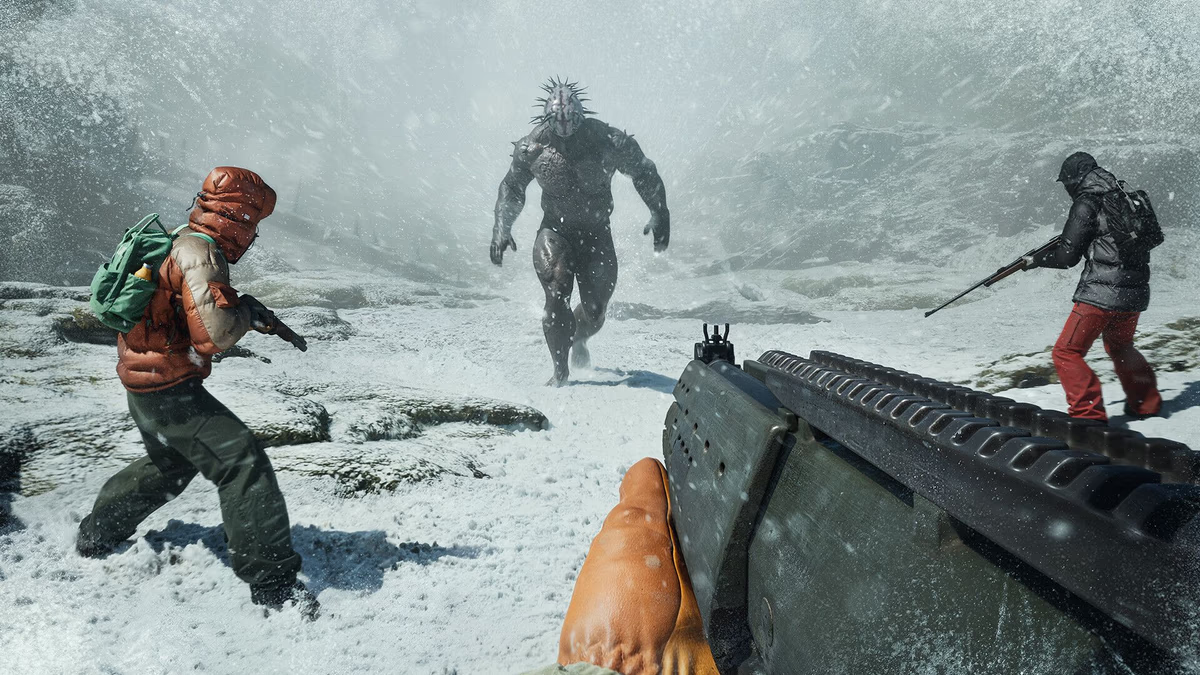
Veterans From Massive, Epic Games Unveil New Survival Shooter HAEX
A new first-person survival shooter called HAEX has been revealed by industry veterans. The game promises a challenging experience set on an alien-scarred world.

Assassin's Creed Creator's Forgotten Fantasy Game, 1666: Amsterdam, Finally Re-Emerges
Patrice Désilets, the visionary behind the original Assassin's Creed, is bringing his long-lost supernatural fantasy game, 1666: Amsterdam, back from the brink. After a decade in development limbo, a playable prologue is now available, signaling a potential release later this year.