 WeCult App
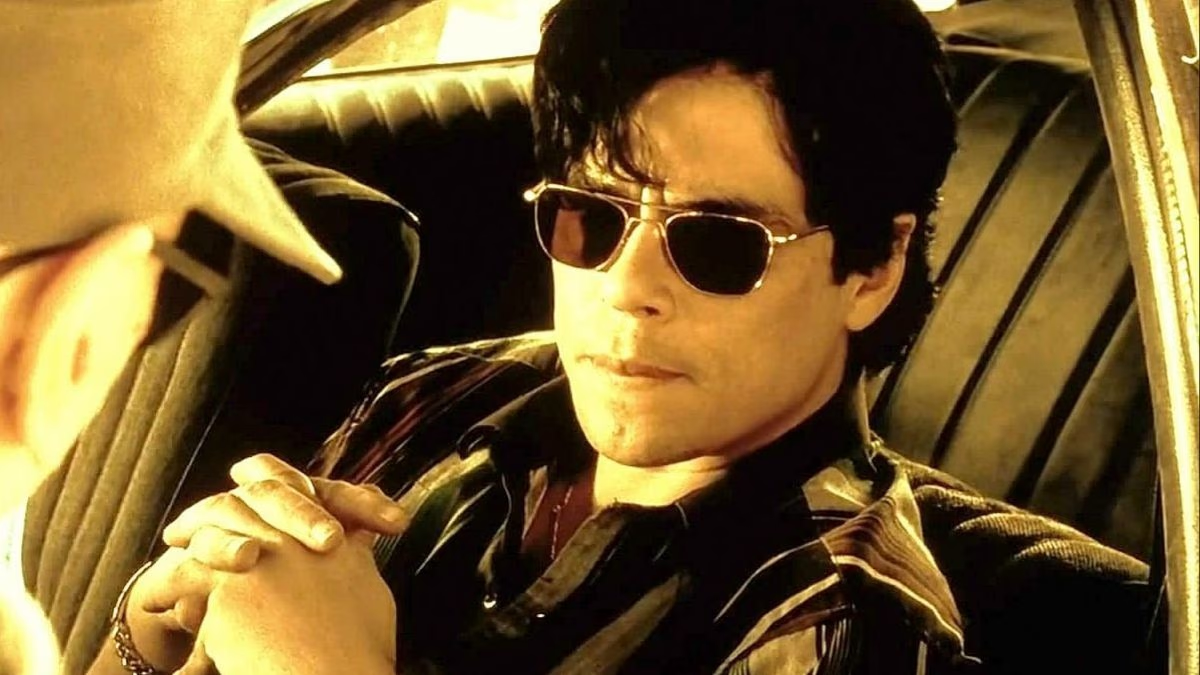
Hollywood's Yellow Filter: Why Mexico Always Looks Like a Desert
American cinema has a peculiar habit of tinting scenes set in Mexico with a pervasive yellow hue. This visual trope, used across countless films and shows, aims to signal heat and arid landscapes, but it often feels like a lazy shortcut for filmmakers.
Ever notice how the moment a character crosses the border into Mexico in an American film, the world suddenly adopts a sepia-toned, dusty sheen? It's a visual cue so common it’s earned its own unofficial moniker: the “Mexico filter.” This pervasive yellow tint, often used to suggest intense heat and arid conditions, has become a staple in Hollywood’s visual lexicon, transforming vibrant locales into parched deserts. While the intention might be to inform the audience about the environment, it’s a technique that’s rarely applied with such uniformity to different regions within the United States itself.
This cinematic choice, while sometimes effective in conveying a sense of place, often feels like an oversimplification. Think of Steven Soderbergh’s Traffic, where scenes south of the border were bathed in a hazy yellow, starkly contrasting with the cooler, cleaner aesthetic of its American counterparts. Similarly, Breaking Bad employed intensified yellow and sepia tones for its cartel-related sequences, a visual style that became instantly recognizable. Even Spectre’s opening sequence in Mexico City, despite its vibrant Day of the Dead setting, was met with a warm yellow grading that leaned into this established trope. Netflix’s Extraction and Saw X have also utilized this dusty yellow cinematography, using color grading to amplify the perceived heat, danger, and chaos of their Mexico-set scenes.
The Tropes Behind the Tint
The rationale behind this visual decision often boils down to conveying temperature and environment. The argument is that a yellow filter signifies heat and dryness, much like a blue filter might suggest cold. However, this logic falters when considering how other hot climates, like Miami, are rarely depicted with such a consistent yellow wash, nor are colder regions like Toronto consistently shown in blue. It’s a narrative shortcut that risks perpetuating a narrow, often inaccurate, perception of Mexico as a monolithic desert landscape. This artistic choice, while intended to inform, often ends up flattening the rich diversity of Mexico’s actual geography and culture into a single, repetitive visual stereotype. The effect is so pronounced that viewers have taken to social media to point out how “the second a movie character steps into Mexico, everything suddenly turns yellow — like the whole scene is filmed through a tortilla.”
What Fans Are Saying
This recurring visual motif hasn't gone unnoticed by audiences, who often express a mix of amusement and frustration. Online discussions frequently highlight how jarring and unrealistic this constant yellow tint can be, especially when it’s applied so broadly. Fans debate whether it's a deliberate choice to signify a certain mood or simply a lazy, ingrained habit within Hollywood production. The lack of consistency, compared to how other countries or even US states are depicted, fuels the conversation, with many feeling it’s a missed opportunity to showcase the true visual richness and diversity of Mexico.
What's Next
As filmmakers continue to tell stories set in Mexico, the debate over the persistent yellow filter is likely to continue. Whether directors will embrace more nuanced visual palettes or continue to rely on this familiar trope remains to be seen, but audiences are certainly paying attention.
This visual trope highlights how filmmakers use color grading as a shorthand to establish setting, raising questions about authenticity and lazy storytelling in global narratives.




WeCult App
Track your series — all in one place
Follow releases, track progress, discover what matches your taste. Rate "Hollywood's Yellow Filter: Why Mexico Al…" on the app.
More Like This
14 Films That Demand a Rewatch: Did You Catch Them All?
Some movies aren't just stories; they're puzzles. We're diving into 14 films that reveal their true genius on a second (or third) viewing.
Parents' Favorite '70s Films: The Movies They Made Us Watch
From the terrifying depths of Amity Island to the underdog spirit of Philadelphia, '70s cinema became a mandatory rite of passage for many families. These iconic films defined a generation's movie nights, with parents insisting on their timeless quality.
10 Films That Tried (and Failed) to Be the Next Harry Potter
Before the highly anticipated HBO series arrives, revisit the movies that chased Hogwarts' shadow, hoping to bottle lightning but ultimately fizzling out.